When the elasticity increases and density decreases of a medium sound is allowed to travel faster. In any medium if the temperature increases.

2a It Shows The Different Mediums When The Frequency Stays The Same But The Wavelength Changes Music Education Activities Learning Targets Music Education
The speed of sound is increasing because were making the gas lighter so it oscillates faster.
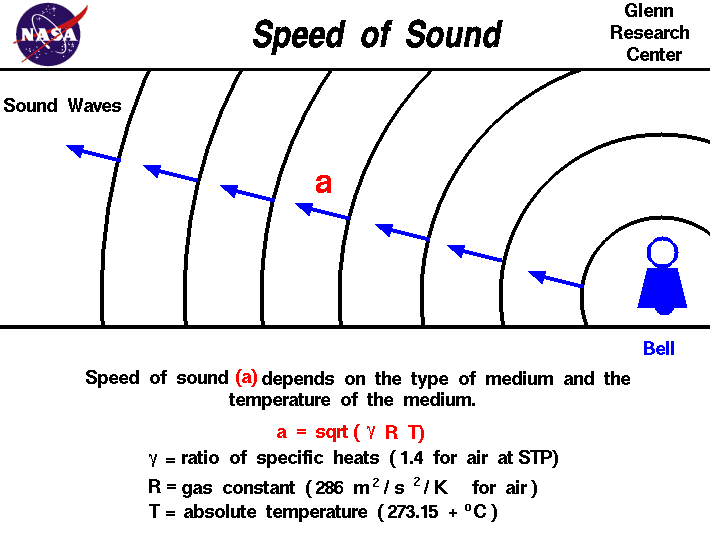
. But the speed it can travel through the new medium changes so the distance it moves during one cycle of vibration will also change. Explain why the speed of sound depends on the temperature of the medium. This is a very broad summary as its not only the type of material that makes a difference to the speed.
Air temperature can change the speed at which sound travels. As the bubbles burst the speed of sound changes causing the frequency of sound waves in the liquid column to change thus changing the pitch. Sound travels about four times faster and farther in water than it does in air.
The speed of sound in air is low because air is compressible. This is why whales can communicate over huge distances in the oceans. Because the molecules are farther apart the sound waves dont have as many molecules to bump against and it creates a much slower domino effect on the sound waves.
The speed that sound travels largely depends on the material type. All sound waves are the same. A medium however has charged particles that interact with EM radiation.
When sound waves move from one medium to another there will be changes to the velocity or speed frequency. There is a system in which the frequency will change when the medium changes. This is because the wavelengths are fixed 2L L L2 L3 etc but the speed of the wave is.
In general sound travels faster in liquids than in gases and quicker in solids than in liquids. Sound travels slowest in gases such as air. In a fluid because the absence of shear forces sound waves are longitudinal.
There are loud sounds and quiet sounds high-pitched squeaks and low-pitched rumbles and even two instruments playing exactly the same musical note will produce sound waves that are quite. Table 1 makes it apparent that the speed of sound varies greatly in different media. When the air is warmer the sound travels faster and when the air is colder the.
The speed of the sound depends on the density and the elasticity of the medium through which it travels. The speed of a sound wave refers to how fast a sound wave is passed from particle to particle through a medium. The speed of sound is usually fastest in solids where molecules are closest together and slowest in gases where molecules are farthest apart.
Higher temperatures lower the density of a medium which puts less resistance on the sound waves. The speed of sound can be calculated as the distance-per-time. Why is this temperature dependence more noticeable in a gas than in a solid or a liquid.
But all sound waves are different too. The speed of sound depends upon the temperature of a medium because temperature determines the speed of the particles. There is no reason therefore to presume that the speed of light in a medium is the same as the speed of light in a vacuum.
The speed of sound depends on the medium and the state of the medium. The speed of sound is increasing because were effectively making the gas stiffer. The more rigid or less compressible.
That means in equation 1 ρ ρ decreases while P stays constant and again the speed of sound increases. The greater the density of a medium the slower the speed of sound. The speed of sound in a particular medium depends on temperature and pressure of that medium.
A string fixed at both ends such as a guitar string. The more rigid or less compressible the medium the faster the speed of sound. Sound travels faster in solids than it does in liquids.
The speed of sound in a medium is determined by a combination of the mediums rigidity or compressibility in gases and its density. The speed of sound on a string is given by vsqrtTmu where T is the tension in. How The Speed of Sound Changes In Different Materials.
For gases the faster the particles the more they bump into each other. If you pluck a guitar string then change the medium status by changing the tension the pitch you hear will change. In air the speed of sound is related to air temperature T by v is the same for all frequencies and wavelengths of sound in air.
Because the molecules are closer together they collide more frequently. Molecules that have more motion higher temperature can transfer their vibrations more easily. Temperature affects the speed of sound because temperature can affect the elastic qualities of different mediums.
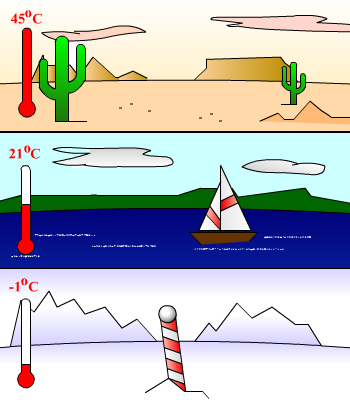
The speed of sound varies in different mediums different temperatures and different pressuresThe speed of sound varies depending with the temperature altitude and air. The speed of sound decreases when it passes from solid to gaseous state of a given medium. The speed of a sound wave in air depends upon the properties of the air - primarily the temperature.
Now suppose we keep the pressure constant and let the gas expand as its heated. However in liquids and solids the particles are close enough together that the difference from temperature is not significant. The greater the elasticity and the lower the density the faster sound travels in.
They travel through a medium by making atoms or molecules shake back and forth. Hence the speed of light in vacuum is constant. Sound waves travel about thirteen times faster in wood than air.
The speed of sound in a medium is determined by a combination of the mediums rigidity or compressibility in gases and its density. The speed of sound is different in a liquid with air bubbles because the density is different. At the very basics lower temperatures will decrease the speed of sound while higher temperatures will increase the speed of sound all other factors being equal.
Note however that the speed of light in vacuum is also invariant meaning the same in all. For example sound waves travel fastest when they are moving through solids and tend to travel a lot slower when moving through gases and liquids. A solid can support both longitudinal and transverse sound waves.
Based on your answer to question 26 explain why sound travels fastest through the particular medium. The speed of sound depends on both the elasticity and density of the medium. A medium can be a solid liquid or a gas such as air.
Frequency is how quickly the medium is vibrating in cycles per second. Up to 24 cash back Air is the least dense of the three mediums. Of the sound wave.
The spacing of the molecules enables sound to travel much faster through a solid than a gas.
Nondestructive Evaluation Physics Sound
Speed Of Sound

Speed Of Sound Definition Formula Factors Affecting The Speed Of Sound And Faqs
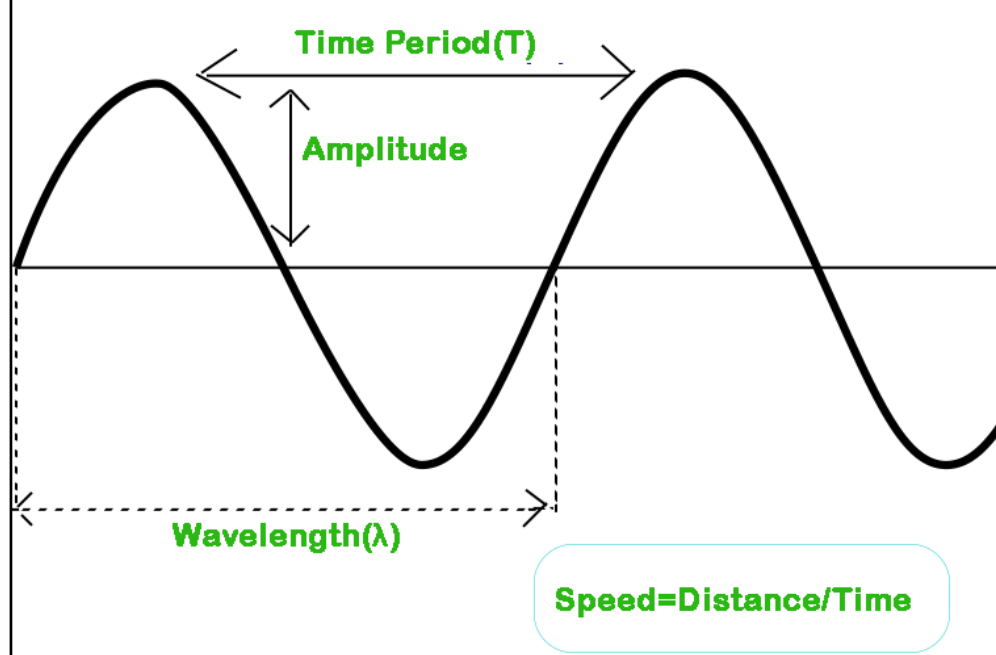
Speed Of Sound Geeksforgeeks


0 Comments